


Portable ice bath buying guide for Australia: size, insulation and setup
Buying a portable ice bath in Australia comes down to three things: whether it fits you and your space, how well it holds the cold, and how easy it is to set up and pack away. Get those right and you'll actually use it. Get them wrong and it becomes a very large bucket in the corner of the yard. This guide walks through what to check.
Quick answer: Look for an ice bath tub big enough to sit in with your shoulders under (check the height and the tallest user it fits), with multi-layer insulation so ice lasts, and a no-tool setup that folds away when you're done. Then check where you'll put it: filled, a 400 L tub weighs around 400 kg, so it needs flat, firm ground.
What makes a portable ice bath "portable"
A portable ice bath is a freestanding, collapsible cold plunge tub. It's usually a round, insulated fabric shell held up by support legs or an inflatable frame. You fill it with water and ice, use it, drain it and fold it into a bag.
That's the key difference from a fixed setup. There's no plumbing, no electrical work and no permanent footprint. The trade-off is that the cold comes from ice you add, rather than a built-in chiller, so insulation matters a lot.
Portable ice bath vs other cold plunge options
| Portable folding tub | Rigid tub | Tub with electric chiller | |
|---|---|---|---|
| How it gets cold | Ice added to water | Ice added to water | Chiller unit cools the water |
| Setup | No tools; pump and legs | Place and fill | Often needs power, space and more setup |
| Storage | Folds into a carry bag | Stays out; takes permanent space | Stays out; takes permanent space |
| Power needed | No | No | Yes |
| Moving house or travelling | Easy | Awkward | Difficult |
| Upfront cost | Lowest | Moderate | Highest |
| Ongoing effort | Buying or making ice | Buying or making ice | Power use and maintenance |
For most people starting out, a portable tub is the sensible first step. You find out whether cold plunging fits your routine before committing to a permanent setup.
Size: will it fit you, and will it fit your space?
Capacity and height
You want to sit down with your legs bent and the water up to your shoulders. That depends on the tub's height and diameter as much as the litres. Check the maximum user height the manufacturer quotes rather than guessing.
Footprint
Measure the space you have. A round tub around 85 cm across fits in a corner of most courtyards, garages or laundries, with room to climb in and out.
Weight when full
Water weighs about a kilogram per litre, so a 400 L tub weighs around 400 kg filled. That's the number people forget. It needs flat, firm ground. If you're thinking about a balcony or an upper floor, check with your building manager or a qualified professional first.
Insulation: how long the cold lasts
Insulation decides whether your ice lasts one session or several hours. Thin, single-layer tubs warm up quickly, especially in an Australian summer. Multi-layer insulated walls slow that down a lot.
- Check how many insulating layers the walls have.
- Look for tear-resistant, leakproof construction; the walls take a lot of pressure when full.
- Keep the tub in the shade where you can. Direct sun works against any insulation.
- Use a cover between sessions if you have one, to keep leaves and bugs out.
Setup and pack-down
If setup is a hassle, you'll stop doing it. Look for a tub that goes up without tools. A hand pump and support legs are a common approach. Check how the tub drains, what it weighs empty and whether it comes with a carry bag.
Accessories make a real difference too. A floating thermometer tells you the actual water temperature rather than your best guess. An ice tray saves trips to the servo. A mat keeps the floor dry when you get out.
Portable ice bath Australia checklist
- Fits the tallest person who'll use it, with shoulders under.
- Diameter fits your space with room to get in and out.
- Flat, firm spot that can take the filled weight.
- Multi-layer insulation, tear-resistant and leakproof.
- No-tool setup; folds into a carry bag.
- Thermometer included, or buy one.
- Ships from within Australia, with a clear warranty and money-back period.
Once it's set up, the next question is how cold to go. Our guide on ice bath temperature and how long to stay in covers common practice for beginners.
Safety first
Cold water immersion is not suitable for everyone. If you're pregnant, or have a heart condition, blood pressure issues, Raynaud's or a respiratory condition, speak to your doctor before you start. Never plunge alone, don't plunge after drinking alcohol, and start with short sessions in water that isn't too cold. Keep children and pets away from a filled tub.
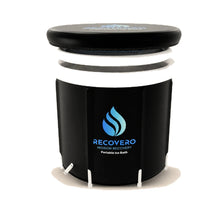
The RECOVERO ICE BATH
RECOVERO ICE BATH is our portable cold plunge tub, built around the checklist above. It holds 400 L, and its 5-layer insulation holds water between 0 and 15°C for hours with ice. It's 85 cm across and 75 cm high, fits users up to about 196 cm, weighs 4 kg empty and folds into its carry bag. Setup needs no tools: the hand pump and support legs are included. It works indoors or outdoors on flat, firm ground.
In the box you'll find a 288-cube ice tray, a floating thermometer and a mat, so you're not buying extras before your first plunge. It ships from Australia with a 30-day money back guarantee and a 12-month warranty.
Frequently asked questions
How big should a portable ice bath be?
Big enough to sit with your shoulders under water with your knees bent. Check the tub's height and the tallest user it's designed for. RECOVERO ICE BATH fits users up to about 196 cm.
Can I use a portable ice bath indoors?
Yes, as long as the floor is flat, firm and can take the filled weight (around 400 kg for a 400 L tub). A mat helps keep the floor dry.
How long does the ice last?
It depends on the starting water temperature, how much ice you add, the weather and whether the tub is in shade. Good insulation is the biggest factor you control.
Do I need a chiller?
No. A portable tub uses ice. A chiller is an option for a permanent setup, but it adds cost and needs power.
How do I pack it away?
Drain it, let it dry fully, remove the legs and fold it into the carry bag. Drying before storage helps keep it fresh.