


How cold should an ice bath be, and how long should you stay in?
The right ice bath temperature is the one you can get into calmly, stay in with steady breathing and get out of feeling in control. That sounds vague, but it's the honest answer: there's no single number that suits everyone. What there is, is a set of common practices that many people follow when they start, and a sensible way to build from there.
Quick answer: Many people starting out use water around 13 to 15°C for one to two minutes, and build up gradually from there. Colder water generally means shorter sessions, and many regular plungers keep sessions to a few minutes. This is general information about common practice, not medical advice, so check with your doctor first if you have any health concerns.
Why there's no single right ice bath temperature
How cold water feels depends on the person. Body size, how used you are to cold, the air temperature, whether you've just trained and how you're feeling on the day all play a part. Two people in the same tub at the same temperature can have very different experiences.
That's why the useful question isn't "what's the perfect temperature?" but "what's a sensible place to start, and how do I progress?"
Common ice bath temperature ranges
These are broad ranges people commonly talk about. Treat them as a guide, not a target.
| Water temperature | How it tends to feel | How people commonly use it |
|---|---|---|
| 13–15°C | Cold, but manageable for most | A common starting point for beginners, often 1 to 2 minutes |
| 10–12°C | Properly cold | Where many regular plungers settle, often for a few minutes |
| Below 10°C | Very cold; hard to breathe calmly at first | Experienced users only, and usually for shorter sessions |
How long should you stay in?
Time and temperature go together. The colder the water, the shorter the session. A few principles many people follow:
- Start short. One to two minutes is plenty for your first few sessions.
- Add time slowly. Increase by 30 seconds or so once a session feels comfortably under control.
- Change one thing at a time. Either go a little colder or stay a little longer, not both at once.
- Stop early if you need to. There's no prize for staying in. Getting out is always the right call if you feel unwell.
Many regular plungers keep sessions to a few minutes. Longer isn't automatically better.
What the first 30 seconds feel like
Getting into cold water usually brings a strong urge to gasp and breathe quickly. It's the part everyone remembers. Many people find it settles after the first 30 seconds or so if they focus on slow, steady breathing out.
That first reaction is also why you should get in slowly, never plunge alone, and keep your head out of the water, especially when you're starting out.
How to measure and manage the water temperature
Guessing doesn't work: your hand is a poor judge of water temperature. Use a floating thermometer and check it before every session.
- Know your starting point. Tap water temperature changes a lot between summer and winter in most parts of Australia, so the amount of ice you need will change too.
- Add ice gradually. Add some, stir, wait a few minutes and check again.
- Use insulation and shade. An insulated tub in the shade holds temperature far longer than a thin one in the sun.
- Make your own ice. Ice trays in the freezer between sessions save regular trips to the servo.
If you're still choosing a tub, our portable ice bath buying guide for Australia covers size, insulation and setup.
Safety: read this before your first plunge
Cold water immersion is not suitable for everyone. If you're pregnant, or have a heart condition, blood pressure issues, Raynaud's or a respiratory condition, speak to your doctor before you try it.
- Never plunge alone. Have someone nearby who knows what you're doing.
- Never plunge after drinking alcohol.
- Start with short sessions in water that isn't too cold.
- Get in slowly, and keep your head above water.
- Get out straight away if you feel dizzy, confused, unwell, or if you can't control your breathing or shivering.
- Warm up gradually afterwards: dry off, put on warm clothes and move around gently.
A simple way to start
- Fill your tub and bring the water to around 13 to 15°C, checking with a thermometer.
- Have a towel and warm clothes ready, and someone nearby.
- Get in slowly and sit down, focusing on long, slow breaths out.
- Stay for one to two minutes, then get out.
- Dry off, dress warmly and move around.
- Repeat at the same settings for a few sessions before changing anything.
Keep it cold for longer
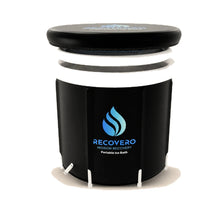
The RECOVERO ICE BATH is built to make temperature easy to manage. Its 5-layer insulation holds 400 L of water between 0 and 15°C for hours with ice, and it comes with a floating thermometer so you always know where you're at, plus a 288-cube ice tray and a mat. It's 85 cm across, fits users up to about 196 cm, and sets up with no tools. It ships from Australia with a 30-day money back guarantee and a 12-month warranty.
Frequently asked questions
Is colder always better?
No. Colder water is harder to stay calm in and usually means shorter sessions. Many people get what they're after from water that's cold but manageable.
What ice bath temperature should a beginner use?
A common starting point is around 13 to 15°C for one to two minutes. Build up gradually, and speak to your doctor first if you have any health concerns.
Should I put my head under?
Many people keep their head and neck above water, particularly when starting out. It makes it easier to keep your breathing steady.
Can I plunge every day?
Some people plunge most days, others a few times a week. Start slowly, keep sessions short and take a day off if you feel run down.
How do I know the actual water temperature?
Use a thermometer. A floating one sits in the tub so you can check it before every session. RECOVERO ICE BATH includes one.